
One Year On: What’s Blocking Britain’s Drains?
Last year, the National Association of Drainage Contractors (NADC) and DrainSafe teamed up to ask our members a simple question:
“What is the most common reason you find for a blocked drain?”
The 2024 results painted a clear picture:
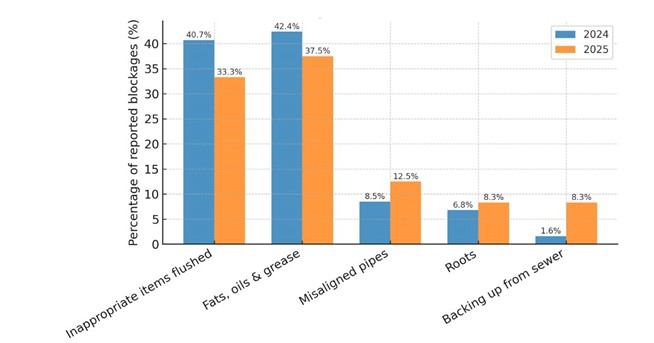
- 42.4% blamed fats, oils and grease (FOG) build-up.
- 40.7% pointed to inappropriate items being flushed — everything from wet wipes to nappies and even underwear.
- 8.5% cited misaligned pipes.
- 6.8% said tree roots.
- Back-ups from the sewer were too rare to register.
Now, one year later, we’ve run the same survey — and the picture has shifted!
2025 results:
- Inappropriate items flushed: 33.3% (down 7.4%)
- Fats, oils and grease: 37.5% (down 4.9%)
- Misaligned pipes: 12.5% (up 4%)
- Roots: 8.3% (up 1.5%)
- Backing up from sewer: 8.3% (previously negligible)
What’s behind the change?
The drop in blockages caused by foreign objects could be a sign that public awareness campaigns are working. Over the past year, there’s been growing public discussion about sewer overflows — and how flushing wipes, sanitary products, and other items can make them more likely by restricting water flow and causing blockages. Campaigners have played a big role in getting that message across, using everything from social media to local events to highlight the environmental cost of poor flushing habits.
It’s encouraging to see that this message appears to be cutting through — fewer inappropriate items in drains means fewer avoidable overflows and cleaner waterways.
While this improvement is welcome, the rise in issues from misaligned pipes and sewer back-ups suggests more structural problems in the network. This could point to ageing infrastructure, shifting ground conditions, or heavier rainfall events putting extra strain on pipework.
Roots are also creeping up (literally), showing that nature still plays a role in drain disruption.
The takeaway: Education campaigns around flushing habits and FOG disposal seem to be having an effect — but keeping drains clear isn’t just about what goes down them. It’s also about maintaining and upgrading the infrastructure beneath our feet.